Chapter 6: Planning
Intelligent behavior often involves more than just reacting to the immediate input. It requires foresight, breaking down complex tasks into smaller, manageable steps, and strategizing how to achieve a desired outcome. This is where the Planning pattern comes into play. At its core, planning is the ability for an agent or a system of agents to formulate a sequence of actions to move from an initial state towards a goal state.
智能行为往往不只是对当前输入做出反应,还需要前瞻性:把复杂任务拆成更小、可管理的步骤,并规划如何达成目标。这正是规划(Planning)模式的作用所在。其核心在于,智能体或多智能体系统能够制定一系列行动,从初始状态走向目标状态。
Planning Pattern Overview
In the context of AI, it's helpful to think of a planning agent as a specialist to whom you delegate a complex goal. When you ask it to "organize a team offsite," you are defining the what—the objective and its constraints—but not the how. The agent's core task is to autonomously chart a course to that goal. It must first understand the initial state (e.g., budget, number of participants, desired dates) and the goal state (a successfully booked offsite), and then discover the optimal sequence of actions to connect them. The plan is not known in advance; it is created in response to the request.
在 AI 语境中,可以把规划智能体看作一位能承接复杂目标的专家。当你让它「组织一次团队外出活动」时,你给出的是目标及其约束,而不是具体做法。智能体的核心任务,是自主
规划通往目标的路径:先厘清初始状态(如预算、人数、意向日期)与目标状态(活动成功预订),再找出连接两者的最优行动序列。计划不是预先写死的,而是根据请求动态生成的。
A hallmark of this process is adaptability. An initial plan is merely a starting point, not a rigid script. The agent's real power is its ability to incorporate new information and steer the project around obstacles. For instance, if the preferred venue becomes unavailable or a chosen caterer is fully booked, a capable agent doesn't simply fail. It adapts. It registers the new constraint, re-evaluates its options, and formulates a new plan, perhaps by suggesting alternative venues or dates.
这一过程的关键特征是适应性:初始计划只是起点,不是僵化剧本。智能体真正的能力,在于吸纳新信息并绕开障碍继续推进。例如,若首选场地不可用或所选餐饮已订满,一个有能力的智能体不会直接失败,而会记录新约束、重新评估选项,并给出新的计划,例如更换场地或调整日期。
However, it is crucial to recognize the trade-off between flexibility and predictability. Dynamic planning is a specific tool, not a universal solution. When a problem's solution is already well-understood and repeatable, constraining the agent to a predetermined, fixed workflow is more effective. This approach limits the agent's autonomy to reduce uncertainty and the risk of unpredictable behavior, guaranteeing a reliable and consistent outcome. Therefore, the decision to use a planning agent versus a simple task-execution agent hinges on a single question: does the "how" need to be discovered, or is it already known?
但也必须看到
灵活性与可预测性之间的权衡。可随情境调整的规划是专门手段,并非万能解。
- 当问题的解法已经
清楚且可重复时,把智能体约束在预定的固定工作流中往往更有效:这样能减少不确定性和失控风险,从而得到更可靠、更一致的结果。- 因此,究竟该用规划智能体还是简单任务执行智能体,归根结底取决于一个问题:「怎么做」
仍需探索,还是已经明确?
Practical Applications & Use Cases
The Planning pattern is a core computational process in autonomous systems, enabling an agent to synthesize a sequence of actions to achieve a specified goal, particularly within dynamic or complex environments. This process transforms a high-level objective into a structured plan composed of discrete, executable steps.
规划模式(Planning) 是自主系统中的核心过程之一,使智能体能够筹划一系列行动来达成既定目标,在动态或复杂环境中尤其重要。它把高层目标转化为由离散、可执行步骤组成的结构化计划。
In domains such as procedural task automation, planning is used to orchestrate complex workflows. For example, a business process like onboarding a new employee can be decomposed into a directed sequence of sub-tasks, such as creating system accounts, assigning training modules, and coordinating with different departments. The agent generates a plan to execute these steps in a logical order, invoking necessary tools or interacting with various systems to manage dependencies.
在流程自动化等领域,规划常用于编排复杂工作流。例如,新员工入职可以拆成一组有依赖关系的子任务:创建系统账号、分配培训模块、与各部门协调等。智能体会先生成计划,再按逻辑顺序执行这些步骤,并通过调用工具或与各系统交互来处理依赖关系。
Within robotics and autonomous navigation, planning is fundamental for state-space traversal. A system, whether a physical robot or a virtual entity, must generate a path or sequence of actions to transition from an initial state to a goal state. This involves optimizing for metrics such as time or energy consumption while adhering to environmental constraints, like avoiding obstacles or following traffic regulations.
在机器人与自主导航领域,规划是系统在状态空间中寻路和决策的基础。无论是物理机器人还是虚拟实体,都必须生成一条路径或一系列行动,使系统从初始状态过渡到目标状态。这要求它在时间、能耗等指标上进行优化,同时满足环境约束,例如避开障碍物或遵守交通规则。
This pattern is also critical for structured information synthesis. When tasked with generating a complex output like a research report, an agent can formulate a plan that includes distinct phases for information gathering, data summarization, content structuring, and iterative refinement. Similarly, in customer support scenarios involving multi-step problem resolution, an agent can create and follow a systematic plan for diagnosis, solution implementation, and escalation.
该模式对结构化信息整合同样重要。比如在撰写研究报告这类复杂任务中,智能体可以先制定计划,再分阶段完成信息收集、数据摘要、内容组织和迭代润色。同样,在需要多步解决问题的客服场景中,智能体也可以建立并遵循系统化的诊断、处理与升级路径。
In essence, the Planning pattern allows an agent to move beyond simple, reactive actions to goal-oriented behavior. It provides the logical framework necessary to solve problems that require a coherent sequence of interdependent operations.
本质上,
规划模式(Planning) 让智能体从单纯的反应式行为走向目标导向行为,为那些需要连贯且相互依赖的操作序列的问题提供必要的逻辑框架。
Hands-on code (Crew AI)
The following section will demonstrate an implementation of the Planner pattern using the Crew AI framework. This pattern involves an agent that first formulates a multi-step plan to address a complex query and then executes that plan sequentially.
下面演示如何用 Crew AI 实现规划者(Planner)模式:智能体先为复杂查询拟定多步计划,再按顺序执行。
import os
from dotenv import load_dotenv
from crewai import Agent, Task, Crew, Process
from langchain_openai import ChatOpenAI


# Load environment variables from .env file for security
load_dotenv()


# 1. Explicitly define the language model for clarity
llm = ChatOpenAI(model="gpt-4-turbo")


# 2. Define a clear and focused agent
planner_writer_agent = Agent(
    role='Article Planner and Writer',
    goal='Plan and then write a concise, engaging summary on a specified topic.',
    backstory=(
        'You are an expert technical writer and content strategist. '
        'Your strength lies in creating a clear, actionable plan before writing, '
        'ensuring the final summary is both informative and easy to digest.'
    ),
    verbose=True,
    allow_delegation=False,
    llm=llm,  # Assign the specific LLM to the agent
)


# 3. Define a task with a more structured and specific expected output
topic = "The importance of Reinforcement Learning in AI"

high_level_task = Task(
    description=(
        f"1. Create a bullet-point plan for a summary on the topic: '{topic}'.\n"
        f"2. Write the summary based on your plan, keeping it around 200 words."
    ),
    expected_output=(
        "A final report containing two distinct sections:\n\n"
        "### Plan\n"
        "- A bulleted list outlining the main points of the summary.\n\n"
        "### Summary\n"
        "- A concise and well-structured summary of the topic."
    ),
    agent=planner_writer_agent,
)


# Create the crew with a clear process
crew = Crew(
    agents=[planner_writer_agent],
    tasks=[high_level_task],
    process=Process.sequential,
)


# Execute the task
print("## Running the planning and writing task ##")
result = crew.kickoff()

print("\n\n---\n## Task Result ##\n---")
print(result)
This code uses the CrewAI library to create an AI agent that plans and writes a summary on a given topic. It starts by importing necessary libraries, including Crew.ai and langchain_openai, and loading environment variables from a .env file. A ChatOpenAI language model is explicitly defined for use with the agent. An Agent named planner_writer_agent is created with a specific role and goal: to plan and then write a concise summary. The agent's backstory emphasizes its expertise in planning and technical writing. A Task is defined with a clear description to first create a plan and then write a summary on the topic "The importance of Reinforcement Learning in AI", with a specific format for the expected output. A Crew is assembled with the agent and task, set to process them sequentially. Finally, the crew.kickoff() method is called to execute the defined task and the result is printed.
该代码用 CrewAI 构建了一个既能规划又能撰写摘要的智能体:先导入
crewai、langchain_openai等依赖,并从.env加载环境变量;再显式实例化 ChatOpenAI 供智能体使用。planner_writer_agent的目标是先规划、后写作,其背景设定强调规划与技术写作能力。任务要求先列出摘要提纲,再围绕 「The importance of Reinforcement Learning in AI」写一段约 200 词的总结,并明确规定输出格式。最后将智能体和任务编入 Crew,采用顺序流程,通过crew.kickoff()执行并打印结果。
Google DeepResearch
Google Gemini DeepResearch (see Fig.1) is an agent-based system designed for autonomous information retrieval and synthesis. It functions through a multi-step agentic pipeline that dynamically and iteratively queries Google Search to systematically explore complex topics. The system is engineered to process a large corpus of web-based sources, evaluate the collected data for relevance and knowledge gaps, and perform subsequent searches to address them. The final output consolidates the vetted information into a structured, multi-page summary with citations to the original sources.
Google Gemini DeepResearch(见图 1)是一套面向自主信息检索与综合的智能体系统。它通过多步流水线动态、迭代地调用 Google 搜索,系统性地探索复杂主题。系统能够处理大量网页来源,评估已获取信息的相关性与知识缺口,并持续搜索补全;最终把核实后的内容整合成带引用的结构化多页摘要。
Expanding on this, the system's operation is not a single query-response event but a managed, long-running process. It begins by deconstructing a user's prompt into a multi-point research plan (see Fig. 1), which is then presented to the user for review and modification. This allows for a collaborative shaping of the research trajectory before execution. Once the plan is approved, the agentic pipeline initiates its iterative search-and-analysis loop. This involves more than just executing a series of predefined searches; the agent dynamically formulates and refines its queries based on the information it gathers, actively identifying knowledge gaps, corroborating data points, and resolving discrepancies.
更具体地说,它不是一次性的问答系统,而是一个受控的长流程:先把用户提示拆成多点研究计划(见图 1),交给用户审阅和修改,以便在执行前共同确定研究方向。计划获批后,系统进入迭代式的搜索—分析循环。它不只是按预设顺序检索,还会根据已获取的信息动态调整查询,主动发现缺口、交叉验证数据,并处理彼此矛盾之处。
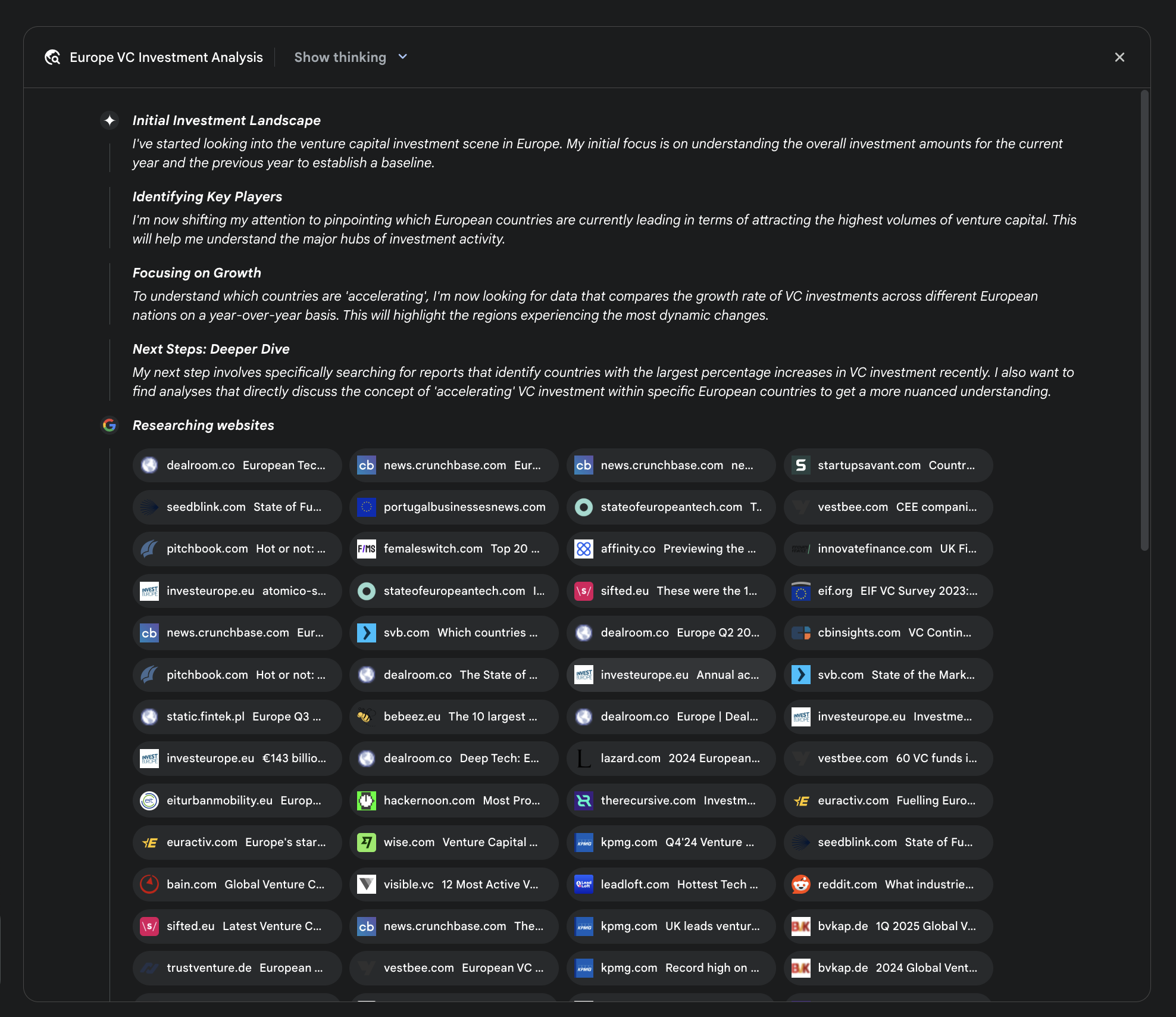
Fig. 1: Google Deep Research agent generating an execution plan for using Google Search as a tool.
图 1:Google Deep Research 智能体生成将 Google 搜索作为工具使用的执行计划。
A key architectural component is the system's ability to manage this process asynchronously. This design ensures that the investigation, which can involve analyzing hundreds of sources, is resilient to single-point failures and allows the user to disengage and be notified upon completion. The system can also integrate user-provided documents, combining information from private sources with its web-based research. The final output is not merely a concatenated list of findings but a structured, multi-page report. During the synthesis phase, the model performs a critical evaluation of the collected information, identifying major themes and organizing the content into a coherent narrative with logical sections. The report is designed to be interactive, often including features like an audio overview, charts, and links to the original cited sources, allowing for verification and further exploration by the user. In addition to the synthesized results, the model explicitly returns the full list of sources it searched and consulted (see Fig.2). These are presented as citations, providing complete transparency and direct access to the primary information. This entire process transforms a simple query into a comprehensive, synthesized body of knowledge.
其关键架构能力之一,是以异步方式管理整个流程。由于调查可能涉及数百个来源,这种设计既能增强对单点故障的容忍度,也允许用户中途离开并在完成时收到通知。系统还可以接入用户提供的文档,把私有材料与网页检索结合起来。最终产出并不是简单罗列信息,而是一份结构化的多页报告;在综合阶段,模型会对收集到的信息进行批判性评估,提炼主题,并组织成逻辑清晰的章节。报告通常还带有音频概览、图表以及指向原始来源的链接,便于核查和继续阅读。除综合结果外,系统还会显式返回完整的检索来源列表(见图 2),以提高透明度并方便追溯。整个过程把一个简单问题转化为系统化的知识产出。
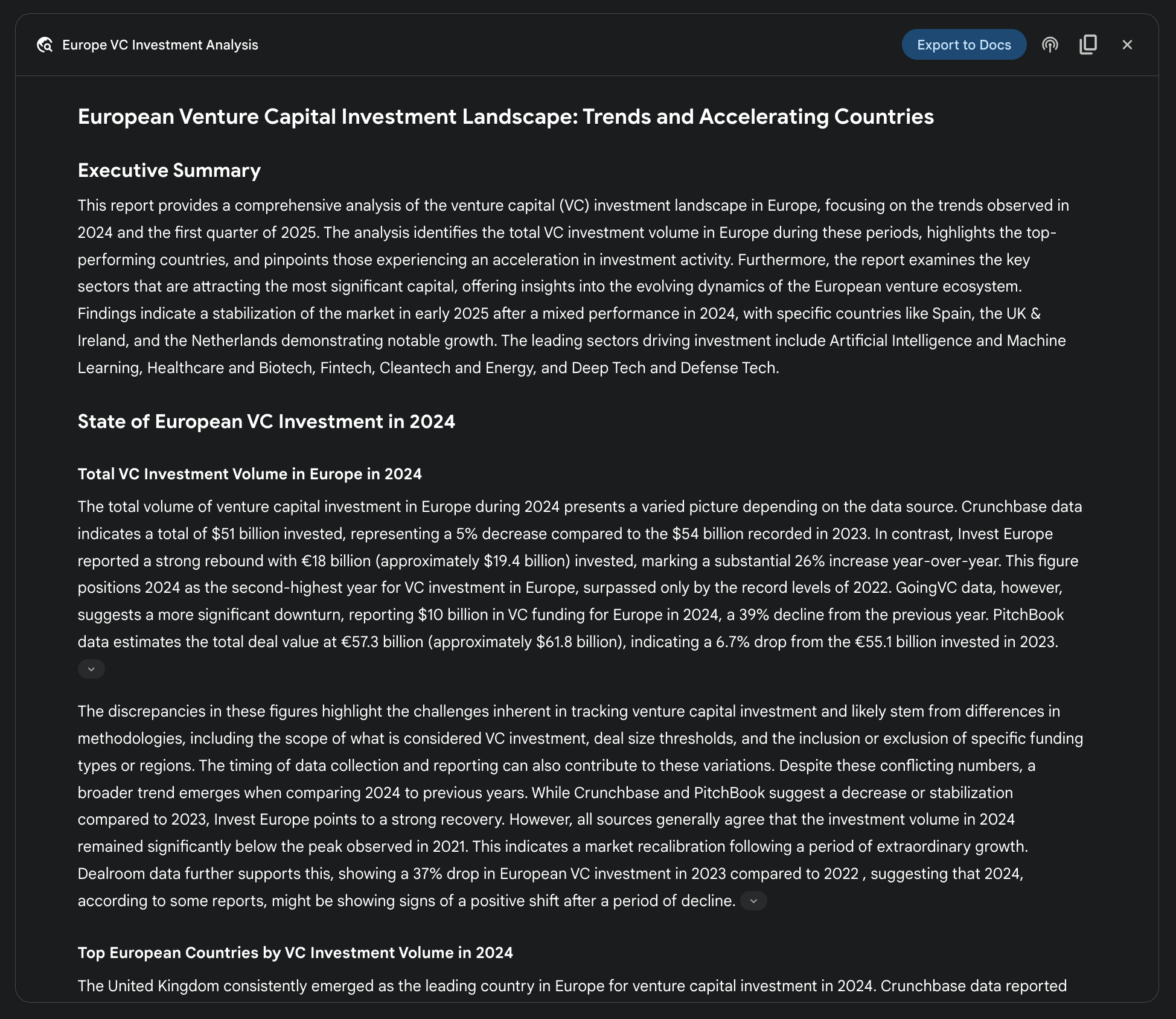
Fig. 2: An example of Deep Research plan being executed, resulting in Google Search being used as a tool to search various web sources.
图 2:Deep Research 计划执行示例——以 Google 搜索为工具检索各类网页来源。
By mitigating the substantial time and resource investment required for manual data acquisition and synthesis, Gemini DeepResearch provides a more structured and exhaustive method for information discovery. The system's value is particularly evident in complex, multi-faceted research tasks across various domains.
通过大幅降低手工采集与综合所需的时间和成本,Gemini DeepResearch 为信息发现提供了更结构化、覆盖更全面的方式;在跨领域、多维度的复杂研究任务中,其价值尤为突出。
For instance, in competitive analysis, the agent can be directed to systematically gather and collate data on market trends, competitor product specifications, public sentiment from diverse online sources, and marketing strategies. This automated process replaces the laborious task of manually tracking multiple competitors, allowing analysts to focus on higher-order strategic interpretation rather than data collection (see Fig. 3).
例如在竞争分析场景中,可以引导智能体系统性地收集并整理市场趋势、竞品规格、多源舆情与营销策略等数据,替代手工跟踪多个竞争对手的繁重工作,使分析人员把精力更多放在高层次的战略判断上,而不是数据采集本身(见图 3)。
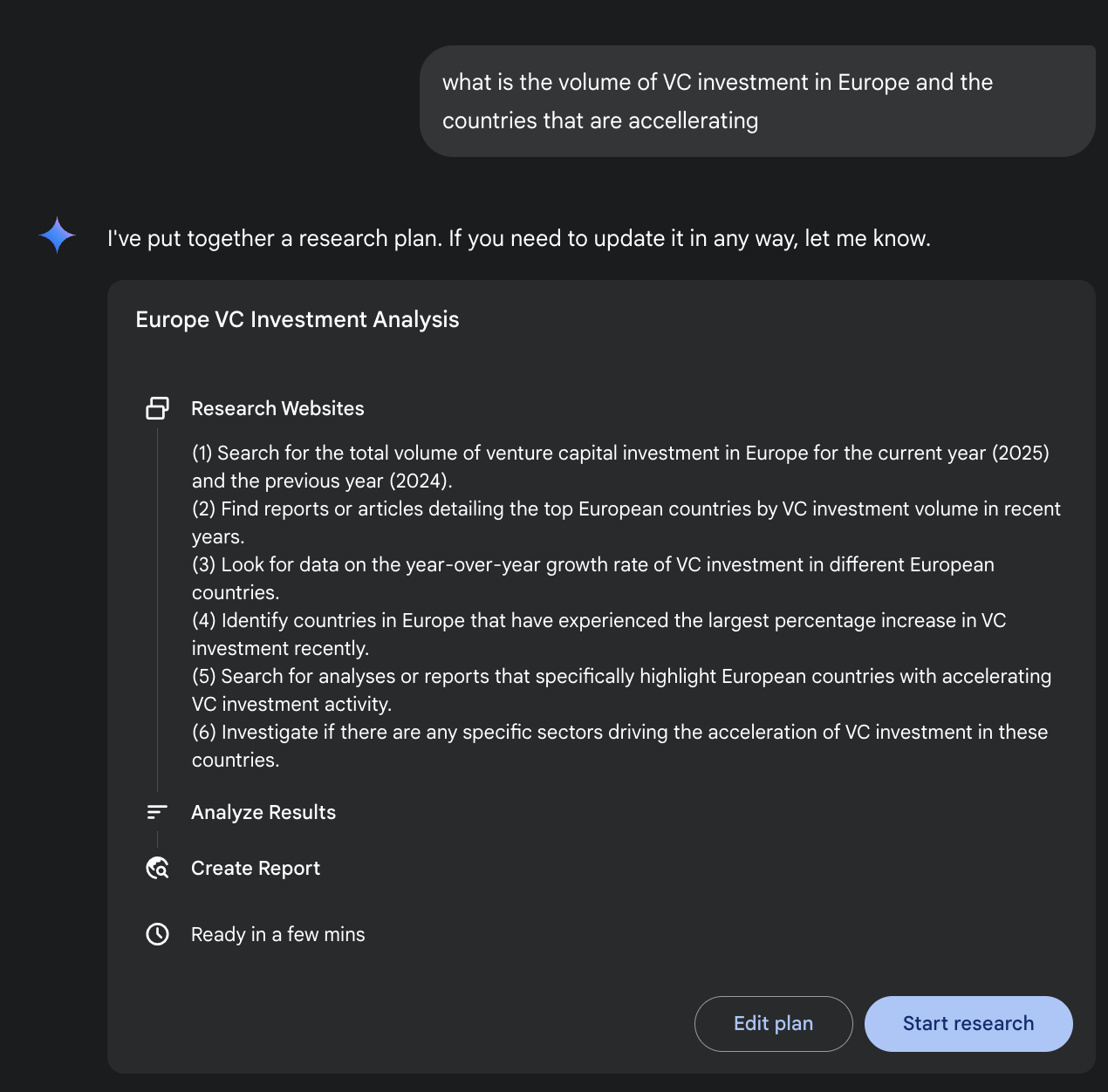
Fig. 3: Final output generated by the Google Deep Research agent, analyzing on our behalf sources obtained using Google Search as a tool.
图 3:Google Deep Research 智能体生成的最终输出——基于通过 Google 搜索获取的来源进行分析。
Similarly, in academic exploration, the system serves as a powerful tool for conducting extensive literature reviews. It can identify and summarize foundational papers, trace the development of concepts across numerous publications, and map out emerging research fronts within a specific field, thereby accelerating the initial and most time-consuming phase of academic inquiry.
同样,在学术探索中,该系统也能有力支撑大规模文献综述:识别并总结奠基性文献,追踪概念在大量出版物中的演进,并勾勒特定领域的新兴研究前沿,从而缩短学术研究最初、也最耗时的阶段。
The efficiency of this approach stems from the automation of the iterative search-and-filter cycle, which is a core bottleneck in manual research. Comprehensiveness is achieved by the system's capacity to process a larger volume and variety of information sources than is typically feasible for a human researcher within a comparable timeframe. This broader scope of analysis helps to reduce the potential for selection bias and increases the likelihood of uncovering less obvious but potentially critical information, leading to a more robust and well-supported understanding of the subject matter.
其效率来自对「搜索—筛选—再搜索」这一迭代循环的自动化,而这恰恰是手工研究的主要瓶颈。其全面性则来自系统在相近时间内处理远超人类研究者通常能覆盖之来源规模和多样性的能力。更广的分析范围有助于降低选择性偏差,并提高发现隐蔽却关键之信息的概率,从而形成更稳健、证据更充分的理解。
OpenAI Deep Research API
The OpenAI Deep Research API is a specialized tool designed to automate complex research tasks. It utilizes an advanced, agentic model that can independently reason, plan, and synthesize information from real-world sources. Unlike a simple Q\&A model, it takes a high-level query and autonomously breaks it down into sub-questions, performs web searches using its built-in tools, and delivers a structured, citation-rich final report. The API provides direct programmatic access to this entire process, using at the time of writing models like o3-deep-research-2025-06-26 for high-quality synthesis and the faster o4-mini-deep-research-2025-06-26 for latency-sensitive application
OpenAI Deep Research API 面向复杂研究任务的自动化,依托能够独立推理、规划并从真实世界来源综合信息的高级智能体模型。与简单问答模型不同,它接收高层查询后,会自主拆分子问题,借助内置工具执行网页检索,并交付结构化、引用充分的最终报告。该 API 以编程方式开放了这整套流程;截至本文撰写时,可选用
o3-deep-research-2025-06-26侧重高质量综合,或o4-mini-deep-research-2025-06-26兼顾低延迟场景。
The Deep Research API is useful because it automates what would otherwise be hours of manual research, delivering professional-grade, data-driven reports suitable for informing business strategy, investment decisions, or policy recommendations. Its key benefits include:
Deep Research API 的价值在于把原本需要数小时的手工研究,自动化为可编程流程,并产出专业级、数据驱动的报告,适用于商业战略、投资决策或政策研判等场景。其主要优势包括:
- Structured, Cited Output: It produces well-organized reports with inline citations linked to source metadata, ensuring claims are verifiable and data-backed.
- Transparency: Unlike the abstracted process in ChatGPT, the API exposes all intermediate steps, including the agent's reasoning, the specific web search queries it executed, and any code it ran. This allows for detailed debugging, analysis, and a deeper understanding of how the final answer was constructed.
- Extensibility: It supports the Model Context Protocol (MCP), enabling developers to connect the agent to private knowledge bases and internal data sources, blending public web research with proprietary information.
- 结构化且带引用的输出: 生成条理清晰的报告,并附行内引用和来源元数据,使论断可核实、有据可查。
- 透明性: 与 ChatGPT 中较为抽象的过程不同,API 暴露完整的中间步骤,包括智能体推理、实际执行的网页搜索查询以及运行过的代码,便于调试、复盘并理解最终答案的形成过程。
- 可扩展性: 支持模型上下文协议(MCP),开发者可以将智能体接入私有知识库与内部数据源,把公开网页研究与专有信息结合起来。
To use the API, you send a request to the client.responses.create endpoint, specifying a model, an input prompt, and the tools the agent can use. The input typically includes a system_message that defines the agent's persona and desired output format, along with the user_query. You must also include the web_search_preview tool and can optionally add others like code_interpreter or custom MCP tools (see Chapter 10) for internal data.
调用时,需要向
client.responses.create端点发送请求,指定模型、输入提示以及智能体可调用的工具。输入通常包括用于界定角色和输出格式的system_message,以及user_query;必须包含web_search_preview工具,也可以按需加入code_interpreter或自定义 MCP 工具(见第 10 章)来访问内部数据。
from openai import OpenAI


# Initialize the client with your API key
client = OpenAI(api_key="YOUR_OPENAI_API_KEY")


# Define the agent's role and the user's research question
system_message = """
You are a professional researcher preparing a structured, data-driven report.
Focus on data-rich insights, use reliable sources, and include inline citations.
"""

user_query = "Research the economic impact of semaglutide on global healthcare systems."


# Create the Deep Research API call
response = client.responses.create(
    model="o3-deep-research-2025-06-26",
    input=[
        {
            "role": "developer",
            "content": [{"type": "input_text", "text": system_message}],
        },
        {
            "role": "user",
            "content": [{"type": "input_text", "text": user_query}],
        },
    ],
    reasoning={"summary": "auto"},
    tools=[{"type": "web_search_preview"}],
)


# Access and print the final report from the response
final_report = response.output[-1].content[0].text
print(final_report)


# --- ACCESS INLINE CITATIONS AND METADATA ---
print("--- CITATIONS ---")
annotations = response.output[-1].content[0].annotations

if not annotations:
    print("No annotations found in the report.")
else:
    for i, citation in enumerate(annotations):
        # The text span the citation refers to
        cited_text = final_report[citation.start_index : citation.end_index]
        print(f"Citation {i + 1}:")
        print(f"  Cited Text: {cited_text}")
        print(f"  Title: {citation.title}")
        print(f"  URL: {citation.url}")
        print(f"  Location: chars {citation.start_index}–{citation.end_index}")

print("\n" + "=" * 50 + "\n")


# --- INSPECT INTERMEDIATE STEPS ---
print("--- INTERMEDIATE STEPS ---")

# 1. Reasoning Steps: Internal plans and summaries generated by the model.
try:
    reasoning_step = next(item for item in response.output if item.type == "reasoning")
    print("\n[Found a Reasoning Step]")
    for summary_part in reasoning_step.summary:
        print(f"  - {summary_part.text}")
except StopIteration:
    print("\nNo reasoning steps found.")

# 2. Web Search Calls: The exact search queries the agent executed.
try:
    search_step = next(item for item in response.output if item.type == "web_search_call")
    print("\n[Found a Web Search Call]")
    print(f"  Query Executed: '{search_step.action['query']}'")
    print(f"  Status: {search_step.status}")
except StopIteration:
    print("\nNo web search steps found.")

# 3. Code Execution: Any code run by the agent using the code interpreter.
try:
    code_step = next(item for item in response.output if item.type == "code_interpreter_call")
    print("\n[Found a Code Execution Step]")
    print("  Code Input:")
    print(f"  ```python\n{code_step.input}\n  ```")
    print("  Code Output:")
    print(f"  {code_step.output}")
except StopIteration:
    print("\nNo code execution steps found.")
This code snippet utilizes the OpenAI API to perform a "Deep Research" task. It starts by initializing the OpenAI client with your API key, which is crucial for authentication. Then, it defines the role of the AI agent as a professional researcher and sets the user's research question about the economic impact of semaglutide. The code constructs an API call to the o3-deep-research-2025-06-26 model, providing the defined system message and user query as input. It also requests an automatic summary of the reasoning and enables web search capabilities. After making the API call, it extracts and prints the final generated report.
该示例通过 OpenAI API 执行「Deep Research」任务:先用 API 密钥初始化客户端完成认证;再将智能体设定为专业研究者,并给出关于司美格鲁肽对全球医疗体系经济影响的研究问题;随后向
o3-deep-research-2025-06-26发起请求,传入系统消息与用户查询,启用推理摘要和网页搜索能力;最后提取并打印最终报告。
Subsequently, it attempts to access and display inline citations and metadata from the report's annotations, including the cited text, title, URL, and location within the report. Finally, it inspects and prints details about the intermediate steps the model took, such as reasoning steps, web search calls (including the query executed), and any code execution steps if a code interpreter was used.
随后,代码会从报告标注中解析并展示行内引用与元数据(如被引片段、标题、URL 以及在报告中的字符位置);最后再遍历并打印中间步骤,包括推理片段、网页搜索调用(含实际查询),以及使用代码解释器时的代码执行步骤。
At a Glance
What: Complex problems often cannot be solved with a single action and require foresight to achieve a desired outcome. Without a structured approach, an agentic system struggles to handle multifaceted requests that involve multiple steps and dependencies. This makes it difficult to break down high-level objectives into a manageable series of smaller, executable tasks. Consequently, the system fails to strategize effectively, leading to incomplete or incorrect results when faced with intricate goals.
是什么: 复杂问题通常无法靠单一动作解决,而需要前瞻性与整体规划。若缺乏结构化方法,智能体系统就难以处理包含多步依赖的复杂请求,也难以把高层目标拆解成可管理的小任务序列。结果就是,面对复杂目标时,系统更容易给出不完整甚至错误的结果。
Why: The Planning pattern offers a standardized solution by having an agentic system first create a coherent plan to address a goal. It involves decomposing a high-level objective into a sequence of smaller, actionable steps or sub-goals. This allows the system to manage complex workflows, orchestrate various tools, and handle dependencies in a logical order. LLMs are particularly well-suited for this, as they can generate plausible and effective plans based on their vast training data. This structured approach transforms a simple reactive agent into a strategic executor that can proactively work towards a complex objective and even adapt its plan if necessary.
为什么: 规划模式提供了一种标准做法:先为目标拟定连贯计划,把高层目标拆成更小、可执行的步骤或子目标,再据此管理复杂工作流、编排多种工具,并按逻辑顺序处理依赖。LLM 尤其适合承担这类工作,因为它可以基于海量训练数据生成合理有效的计划。借助这种结构化路径,原本只会被动响应的智能体,就能转变为主动推进复杂目标、并在必要时调整计划的执行者。
Rule of thumb: Use this pattern when a user's request is too complex to be handled by a single action or tool. It is ideal for automating multi-step processes, such as generating a detailed research report, onboarding a new employee, or executing a competitive analysis. Apply the Planning pattern whenever a task requires a sequence of interdependent operations to reach a final, synthesized outcome.
经验法则: 当用户请求复杂到无法由单一动作或单一工具完成时,就适合使用规划模式。它尤其适用于多步流程自动化,例如撰写详细研究报告、新员工入职或竞争分析。凡是必须经过一串相互依赖的操作,才能得到最终综合结果的任务,都值得考虑这种模式。
Visual summary
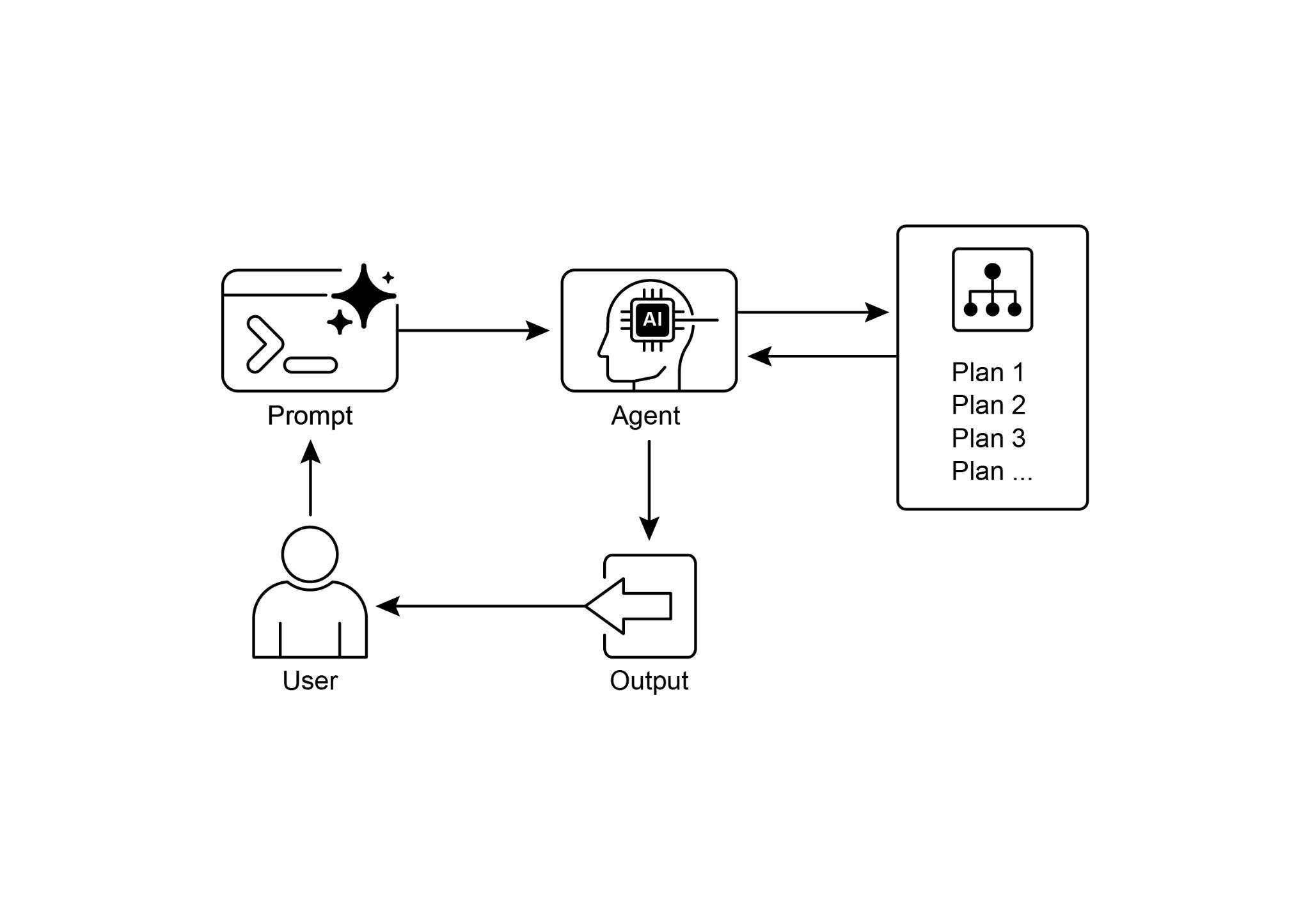
Fig.4; Planning design pattern
图 4:规划(Planning)设计模式。
Key Takeaways
- Planning enables agents to break down complex goals into actionable, sequential steps.
- It is essential for handling multi-step tasks, workflow automation, and navigating complex environments.
- LLMs can perform planning by generating step-by-step approaches based on task descriptions.
- Explicitly prompting or designing tasks to require planning steps encourages this behavior in agent frameworks.
- Google Deep Research is an agent analyzing on our behalf sources obtained using Google Search as a tool. It reflects, plans, and executes
- 规划使智能体能够把复杂目标拆成可依次执行的步骤。
- 它对多步任务、工作流自动化以及复杂环境中的决策都至关重要。
- LLM 可以根据任务描述生成逐步方案,从而承担规划工作。
- 在提示或任务设计中显式加入规划环节,有助于强化这种行为。
- Google Deep Research 就是一个典型例子:它以 Google 搜索为工具,具备反思、规划和执行能力。
Conclusion
In conclusion, the Planning pattern is a foundational component that elevates agentic systems from simple reactive responders to strategic, goal-oriented executors. Modern large language models provide the core capability for this, autonomously decomposing high-level objectives into coherent, actionable steps. This pattern scales from straightforward, sequential task execution, as demonstrated by the CrewAI agent creating and following a writing plan, to more complex and dynamic systems. The Google DeepResearch agent exemplifies this advanced application, creating iterative research plans that adapt and evolve based on continuous information gathering. Ultimately, planning provides the essential bridge between human intent and automated execution for complex problems. By structuring a problem-solving approach, this pattern enables agents to manage intricate workflows and deliver comprehensive, synthesized results.
总之,规划模式是智能体系统的基础构件之一。它把系统从简单的反应式应答者,提升为更具战略性和目标导向的执行者。现代大语言模型提供了将高层目标自主拆解为连贯、可执行步骤的核心能力。该模式既适用于 CrewAI 智能体这类顺序执行场景,也能扩展到更复杂、更动态的系统;Google DeepResearch 就是一个高阶例子,它能够在持续收集信息的过程中迭代研究计划并不断调整。归根结底,规划在复杂问题中架起了人类意图与自动执行之间的桥梁。借助结构化的问题求解路径,智能体得以管理复杂工作流,并交付完整、综合的结果。
References
- Google DeepResearch (Gemini Feature): gemini.google.com
- OpenAI ,Introducing deep research https://openai.com/index/introducing-deep-research/
- Perplexity, Introducing Perplexity Deep Research, https://www.perplexity.ai/hub/blog/introducing-perplexity-deep-research